Learn Beyond Classrooms, Get Certified, and Discover Your Path Early REGISTER NOW Admissions 2026–27 Open — APPLY NOW NAAC A+ Accredited · · Top Private University in Rajasthan Highest Package: ₹44 LPA | 1,682+ Students Placed in 2025 Learn Beyond Classrooms, Get Certified, and Discover Your Path Early REGISTER NOW Admissions 2026–27 Open — APPLY NOW NAAC A+ Accredited · Top Private University in Rajasthan
Home Faculty Department of Pharmacy Dr Gurpreet Singh
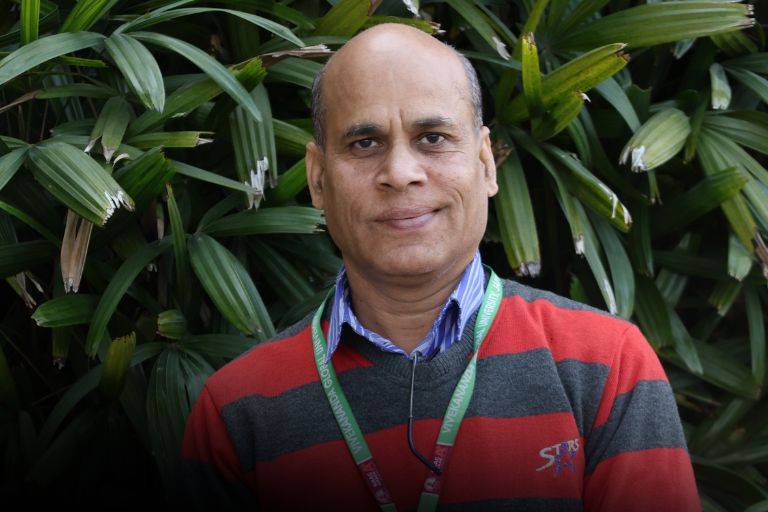
Dr Gurpreet Singh
Dr Gurpreet Singh
Associate Professor
🎓 PhD. M. Pharm (Pharmaceutical Chemistry), B. Pharm
⏱️ 13 year Experience
✉️ gurpreet.singh@vgu.ac.in
Specialization: Pharmaceutical Chemistry, Drug DiscoveryAnti-DiabetesAnti-MicrobialAnti-cancer
Academic Achievements
Research & Publications
Affiliations & Engagements
Awards & Honours

Bio

Dr Gurpreet Singh is an Associate Professor in the Department of Pharmacy at Vivekananda Global University, Jaipur, Rajasthan, India. He has more than 13 years of teaching and research experience in Pharmaceutical Sciences. He completed his M. Pharm in Pharmaceutical Chemistry and successfully defended his PhD in Pharmaceutical Sciences at I.K. Gujral Punjab Technical University, Punjab, India. His doctoral research focuses on the design, synthesis, and biological evaluation of thiazolidinedione-based ligands as promising anti-diabetic agents. His core research areas include medicinal chemistry, heterocyclic synthesis, molecular docking, molecular dynamics simulations, lead optimization, computational drug design, and in vitro/in vivo pharmacological evaluation.

Dr. Singh has published more than 32 research and review articles in reputed international journals such as European Journal of Medicinal Chemistry, Bioorganic Chemistry, RSC Medicinal Chemistry, Journal of Biomolecular Structure and Dynamics, and Molecular Diversity. His publications have earned significant academic recognition with an H-index of 17 and over 1000 citations on Scopus.

He possesses hands-on expertise in sophisticated analytical and characterisation techniques, including FT-IR, NMR, LC-MS, GC-MS, HPLC, Flash Chromatography, Microwave-assisted synthesis, ELISA, histopathology, and biochemical analyses. He has also contributed to interdisciplinary collaborative projects with national and international researchers, including collaborations with Taipei Medical University, Taiwan. In addition to research, Dr Singh is actively involved in teaching, academic administration, student mentoring, accreditation activities (NAAC and PCI-QCI), and alumni coordination. He has supervised B. Pharm and M. Pharm research projects and continues to guide students in medicinal chemistry and pharmaceutical research. He is a life member of APTI and SPER and has received recognition for his scientific contributions, including the “Best Paper Award” at the APTI Punjab State Conference.

Academic Degrees

  • 2026- PhD in Pharmaceutical Sciences (Pharmacy) from IKGPTU, Jalandhar, Punjab, India
  • 2012- M. Pharmacy in Pharmaceutical Chemistry from ISF College of Pharmacy, Moga, Punjab
  • 2010- B. Pharmacy from Kurukshetra University, Kurukshetra

Academic Appointments

  • Aug, 2012 - Aug, 2016- Assistant Professor- L.R. Institute of Pharmacy, Solan, Himachal Pradesh, India
  • Sep, 2016 - Oct, 2017- Assistant Professor- Rajendra Institute of Technology and Sciences, Sirsa, Haryana, India
  • Oct, 2017 - Jan, 2019- Project Assistant Level-II- CSIR-IHBT, Palampur, Himachal Pradesh, India
  • Jan 2019 – April 2026- Assistant Professor- ISF College of Pharmacy, Moga, Punjab, India

Professional Experience

13 years 6 months

Courses Taught

  • B. Pharmacy
  • M. Pharmacy

Research Interests

Drug Discovery

Anti-Diabetes

Anti-Microbial

Anti-cancer

Publications

34

Journal Articles

  • Singh, G. et al. (2024) ‘3,5-Disubstituted-thiazolidine-2,4-dione hybrids as antidiabetic agents’, European Journal of Medicinal Chemistry, 266, p.116139.
  • Dhiman, P. et al. (2024) ‘Discovery of thiazolidinedione-based pancreatic lipase inhibitors as anti-obesity agents’, Journal of Biomolecular Structure and Dynamics, pp.1-23.
  • Liao, Z.Y. et al. (2024) ‘Febuxostat-based hydroxamic acid nanoformulation elicits anti-tumour activity’, European Journal of Medicinal Chemistry, 279, p.116866.
  • Singh, G. et al. (2024) ‘Thiazolidine-2,4-dione hybrids as dual alpha-amylase and alpha-glucosidase inhibitors’, RSC Medicinal Chemistry, 15(8), pp.2826-2854.
  • Vashist, H., Rathor, D.S. and Singh, G. (2014) ‘Volatile oil yield from citrus fruits by hydrodistillation’, Singapore Journal of Scientific Research, 4, pp.15-18.
  • Singh, G., Nayak, S.K. and Monga, V. (2017) ‘1,5-Benzodiazepine derivatives as antibacterial and antitubercular agents’, Indian Journal of Heterocyclic Chemistry, 27(2), pp.143-149.
  • Monga, V., Singh, H. and Singh, G. (2017) ‘Thiazole clubbed oxadiazole derivatives: synthesis and biological evaluation’, Indian Journal of Heterocyclic Chemistry, 27(1), pp.51-57.
  • Kumar, D. et al. (2018) ‘4-Aryl/heteroaryl-4H-fused pyrans as anti-proliferative agents’, Anti-Cancer Agents in Medicinal Chemistry, 18(1), pp.57-73.
  • Verma, R. et al. (2020) ‘Neuropharmacological evaluation of 2,4-disubstituted-1,5-benzodiazepines’, Bioorganic Chemistry, 101, p.104010.
  • Devi, P. et al. (2026) ‘Furan-clubbed 1,2,3-triazole derivatives as alpha-glucosidase inhibitors’, Future Medicinal Chemistry, pp.1-5.
  • Singh, G. and Monga, V. (2019) ‘Naphthalene-based pyrimidine: synthesis and biological evaluation’, Pharmaspire, 11, pp.88-92.
  • Gaba, S., Singh, G. and Monga, V. (2021) ‘Thiazolidinedione derivatives as potent alpha-glucosidase inhibitors’, Pharmaspire, 13(4), pp.218-222.
  • Srivastva, D. et al. (2015) ‘An overview on transungual drug delivery system’, European Journal of Biomedical and Pharmaceutical Sciences, 2(5).
  • Kataria, R. et al. (2013) ‘Pharmacological activities on Glycyrrhiza glabra: A review’, Asian Journal of Pharmaceutical and Clinical Research, 6(1), pp.5-7.
  • Singh, H. et al. (2018) ‘Esterase inhibitors: design strategies and mechanistic insights’, Mini Reviews in Medicinal Chemistry, 18(10), pp.837-894.
  • Arora, N. et al. (2020) ‘Recent advances in benzodiazepines’, Bioorganic Chemistry, 97, p.103668.
  • Kumar, D. et al. (2020) ‘Medicinal perspective of indole derivatives’, Current Drug Targets, 21(9), pp.864-891.
  • Sharma, S. et al. (2020) ‘Heterocyclic anti-inflammatory agents: recent advancements’, European Journal of Medicinal Chemistry, 200, p.112438.
  • Devi, V., Singh, G. and Monga, V. (2020) ‘Synthetic chemistry of 1,5-benzothiazepines’, Journal of Heterocyclic Chemistry, 57(9), pp.3255-3270.
  • Nehra, B. et al. (2020) ‘Bioactive pyrazoline derivatives’, European Journal of Medicinal Chemistry, 205, p.112666.
  • Gaba, S. et al. (2021) ‘Medicinal attributes of berberine derivatives’, Bioorganic and Medicinal Chemistry, 38, p.116143.
  • Pradhan, T. et al. (2021) ‘Aurora kinase inhibitors as anticancer agents’, European Journal of Medicinal Chemistry, 221, p.113495.
  • Saini, A. et al. (2022) ‘Adenosine receptor antagonists: therapeutic perspective’, European Journal of Medicinal Chemistry, 227, p.113907.
  • Singh, K. et al. (2021) ‘Multi-target directed ligands as antidepressant agents’, Current Neuropharmacology.
  • Kajal, K. et al. (2022) ‘2,4-Thiazolidinediones-based ligands: medicinal perspective’, Archiv der Pharmazie, 355(9), p.2100517.
  • Chaurasyia, A. et al. (2023) ‘Rhodanine derivatives as antimicrobial and antiviral agents’, Chemical Biology and Drug Design, 101(3), pp.500-549.
  • Singh, G. and Monga, V. (2023) ‘Peptide nucleic acids: synthesis and backbone modifications’, Bioorganic Chemistry, p.106860.
  • Barik, P. et al. (2024) ‘Structural aspects of HIV-1 integrase inhibitors’, Molecular Diversity, pp.1-35.
  • Rahman, S.M. et al. (2025) ‘Pyrimidine appended HIV-1 NNRT inhibitors’, Bioorganic Chemistry, p.108273.
  • Sharma, R. et al. (2025) ‘ATM, ATR, and DNA-PK inhibitors as cancer therapeutics’, Journal of Enzyme Inhibition and Medicinal Chemistry, 40(1), p.2489720.
  • Jha, R. et al. (2025) ‘Dual alpha-amylase and alpha-glucosidase inhibitors’, Bioorganic Chemistry, p.108762.
  • Patel, R. et al. (2025) ‘FabH inhibitors for antimicrobial therapy’, Molecular Diversity, pp.1-51.
  • Singh, G. et al. (2026) ‘Small-molecule ATR kinase inhibitors as anticancer agents’, Future Medicinal Chemistry, pp.1-19.

Book Chapters

Singh G, Singh S, Mehan S. Modulating Mitogen-Activated Protein Kinase (MAPK) Downstream Signaling Pathways in Cerebral Ischemic Hemorrhages. In Ischemic Injury 2024 (pp. 395-410). Apple Academic Press.

Conferences, Talks & Speaking Engagements

22

Affiliations

  • Life Member of Society of Pharmaceutical Education and Research (SPER/LM/HP/030)2.
  • Life Member of Association of Pharmaceutical Teachers of India (PU/LM-447)

In the Media

  • ORCID: 0000-0002-1421-3782
  • Scopus Author ID: 56166600300
  • Web of Science Researcher ID: JJD-6693-2023
  • linkedin.com/in/gurpreet-singh-97970044
📄
No content available for this section yet.
Quick Info
🏛️ Department
Department of Pharmacy
🎓 Qualification
PhD. M. Pharm (Pharmaceutical Chemistry), B. Pharm
⏱️ Experience
13 year
🔬 Specialization
Pharmaceutical Chemistry, Drug DiscoveryAnti-DiabetesAnti-MicrobialAnti-cancer
✉️ Email
gurpreet.singh@vgu.ac.in
← All Department of Pharmacy Faculty
Apply Now